How to Measure the ROI of Your CRM Software Investment?
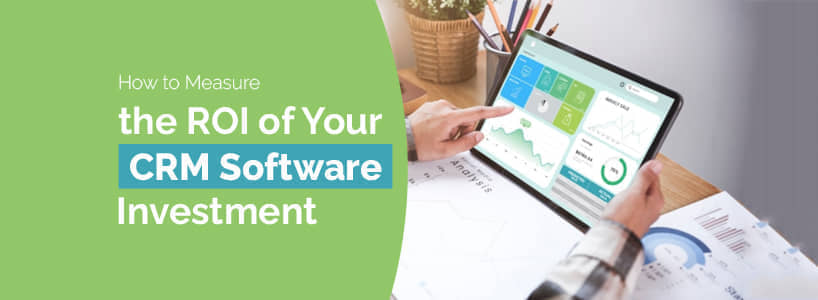
Customer Relationship Management (CRM) software is a powerful tool for businesses of all sizes. It streamlines interactions with leads and customers, improves sales efficiency, and fosters stronger relationships. But with any investment, especially in technology, it's crucial to understand the return on investment (ROI).
So, how do you measure the ROI of your CRM software? It's not just about the bottom line. While increased sales revenue is a key metric, a well-functioning CRM impacts your business in several ways. Here's a breakdown of the process to effectively measure your CRM's ROI:
1. Define Your Goals
Before diving into numbers, establish clear goals for your CRM implementation. What specific areas do you want to improve? Here are some common objectives:
- Increase Sales Conversion Rates: Track the percentage of leads that convert into paying customers.
- Reduce Sales Cycle Length: Measure the average time it takes to close a deal.
- Improve Customer Retention: Monitor customer churn rate and identify areas for improvement.
- Enhance Sales Team Productivity: Analyze the number of deals worked on and closed per salesperson.
2. Establish Baseline Metrics
To measure progress, you need a starting point. Gather data on your key performance indicators (KPIs) before implementing the CRM. This data will serve as your baseline for comparison.
3. Identify CRM Benefits
Now, let's look at the benefits a CRM can bring that contribute to your ROI. Here are some quantifiable areas to consider:
- Increased Sales: Track the total revenue generated after CRM implementation compared to the baseline.
- Improved Lead Management: Analyze the number of qualified leads nurtured through the sales funnel.
- Enhanced Customer Satisfaction: Monitor customer satisfaction scores through surveys or feedback forms.
- Reduced Costs: Identify areas where the CRM has streamlined processes, leading to cost savings (e.g., reduced administrative tasks).
4. Calculate Your ROI
Once you have your pre- and post-CRM data, it's time for the ROI calculation. Here's a basic formula:
ROI = (Net Gain - Cost of Investment) / Cost of Investment * 100- Net Gain: This represents the total financial benefit of using the CRM (increased sales, cost savings, etc.).
- Cost of Investment: This includes the CRM Software licenses, implementation costs, training expenses, and any ongoing maintenance fees.
5. Analyze and Refine
Don't stop at the initial ROI calculation. Regularly analyze your CRM data to identify areas for further optimization. Are there specific features underutilized by your team? Can you refine workflows to improve efficiency?
By continually monitoring and refining your CRM usage, you can maximize its positive impact on your business and ensure a healthy return on investment.
In Conclusion
Measuring CRM ROI goes beyond a single number. It's about understanding how the software empowers your sales team, strengthens customer relationships, and ultimately contributes to your business growth. By defining clear goals, establishing baselines, and tracking key metrics, you can demonstrate the value of your CRM investment and continuously optimize its effectiveness.
-
21 May, 2025 at 5:56 pmThis post kept me hooked till the very end. Amazing work on keeping it so compelling!
-
28 June, 2024 at 12:06 amI love the way you presented this idea—simple yet powerful. Well done!
-
28 June, 2024 at 12:06 amThis is such a helpful article! You've explained everything so clearly. Keep up the good work!
-
28 June, 2024 at 12:06 amWow, I learned something new today. Thanks for sharing your expertise
-
24 June, 2024 at 2:43 amYour writing style is engaging and easy to follow. Love it
-
23 June, 2024 at 3:22 pmI appreciate the effort you put into this. Well done!
Add a Comment
Your email address will not be published. Required fields are marked *
Categories
Popular Posts
![Why Can Growing Businesses No Longer Rely on Spreadsheets to Manage Customers? [thumb]](https://blogimages.weblink.in/why-can-growing-businesses-no-longer-rely-on-spreadsheets-to-manage-customers-350x128.jpg)
Why Can Growing Businesses No Longer Rely on Spreadsheets to Manage Customers?
 Poonam
 Jul 14, 2026
![How WhatsApp Business API (WABA) Suite Can Transform Your Customer Communication [thumb]](https://blogimages.weblink.in/how-whatsapp-business-api-waba-suite-can-transform-your-customer-communication-350x128.png)
How WhatsApp Business API (WABA) Suite Can Transform Your Customer Communication
![Scale Your Business with CRM@Weblink & WhatsApp API Integration: A Complete Guide [thumb]](https://blogimages.weblink.in/scale-your-business-with-crm-weblink-whatsapp-api-integration-a-complete-guide-350x128.jpg)