Complete Guide to Choosing the Best School ERP System
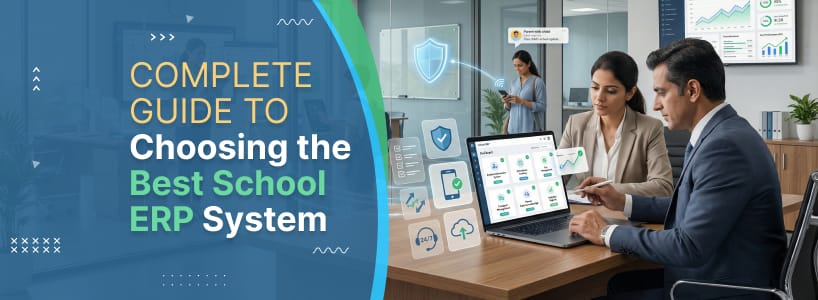
In todays digital era, educational institutions are increasingly adopting ERP Software to manage their daily operations efficiently. A School ERP System integrates different administrative and academic activities into a single platform. From student admissions to attendance, fee management, exams, and communication, everything can be managed in one centralized system. This not only saves time but also improves transparency and accuracy in school management.
What is a School ERP System?
- A School ERP System is a software solution designed to automate and streamline the administrative and academic processes of educational institutions. It connects various departments such as administration, teachers, students, and parents through a unified digital platform.
- With the help of ERP software, schools can easily manage data, generate reports, and communicate important information in real time. This reduces manual work and paperwork while improving overall productivity.
Why Schools Need ERP Software?
Modern schools handle a large amount of data every day. Managing everything manually can lead to errors, delays, and inefficiencies. ERP software helps schools overcome these challenges.
Key benefits include:
- Centralized data management
- Improved communication between teachers, parents, and students
- Automation of routine tasks
- Better decision-making with accurate reports
- Reduced paperwork and administrative workload
By implementing the right ERP software, schools can focus more on education and student development rather than administrative tasks.
Key Features to Look for in School ERP Software
Before selecting an ERP system, schools should carefully evaluate the features it offers. A good ERP solution should support both academic and administrative activities.
| Feature | Description |
|---|---|
| Admission Management | Automates student admission and registration processes |
| Attendance Tracking | Maintains daily attendance records for students and staff |
| Fee Management | Tracks fee collection, payments, and pending dues |
| Examination Management | Manages exam schedules, marks, and report cards |
| Communication Tools | Enables messaging between teachers, parents, and students |
| Report Generation | Provides detailed academic and administrative reports |
These features ensure smooth functioning of the institution and better coordination among stakeholders.
Factors to Consider When Choosing the Best School ERP System
Choosing the right ERP software is an important decision for any educational institution. Here are some key factors to consider:
1. Ease of Use - The software should have a simple and user-friendly interface so that teachers, administrators, and parents can easily use it.
2. Customization Options - Every school has different requirements. A good ERP system should allow customization according to the institutions needs.
3. Data Security - Since schools handle sensitive student data, the ERP software must have strong security measures to protect information.
4. Scalability - As the school grows, the system should be able to handle increasing data and users without performance issues.
5. Technical Support - Reliable customer support and regular updates are essential for smooth operation of the ERP system.
Competitive Analysis of School ERP Solutions
Many ERP solutions are available in the market, each offering different features. Schools should compare options based on functionality, ease of use, pricing, and support services.
| ERP Feature | Basic ERP | Advanced ERP |
| Automation | Limited | High |
| Integration | Partial | Full |
| Data Analytics | Basic | Advanced |
| Communication Tools | Limited | Multiple Channels |
| Scalability | Medium | High |
Conducting a proper comparison helps institutions select the best ERP software that fits their requirements and budget.
Conclusion
A School ERP System plays a crucial role in modernizing educational institutions. By automating daily operations and improving communication, ERP software helps schools save time, reduce errors, and enhance administrative efficiency.
When choosing the best ERP software, schools should focus on features, ease of use, security, scalability, and support services. The right ERP solution will not only simplify management tasks but also create a better learning environment for students, teachers, and parents.
Add a Comment
Your email address will not be published. Required fields are marked *
Categories
Popular Posts
![Why Can Growing Businesses No Longer Rely on Spreadsheets to Manage Customers? [thumb]](https://blogimages.weblink.in/why-can-growing-businesses-no-longer-rely-on-spreadsheets-to-manage-customers-350x128.jpg)
Why Can Growing Businesses No Longer Rely on Spreadsheets to Manage Customers?
 Poonam
 Jul 14, 2026
![How WhatsApp Business API (WABA) Suite Can Transform Your Customer Communication [thumb]](https://blogimages.weblink.in/how-whatsapp-business-api-waba-suite-can-transform-your-customer-communication-350x128.png)
How WhatsApp Business API (WABA) Suite Can Transform Your Customer Communication
![Scale Your Business with CRM@Weblink & WhatsApp API Integration: A Complete Guide [thumb]](https://blogimages.weblink.in/scale-your-business-with-crm-weblink-whatsapp-api-integration-a-complete-guide-350x128.jpg)