CRM Features That Improve Sales & Customer Engagement
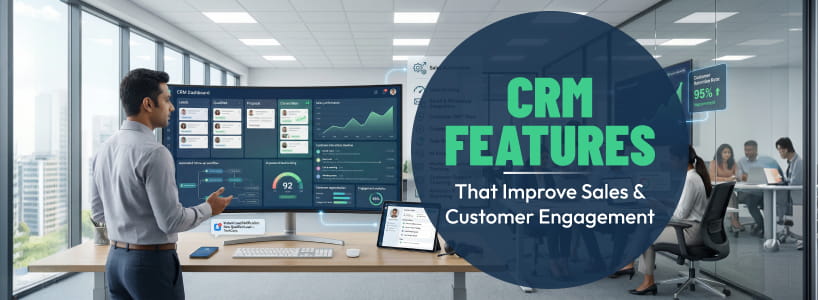
Customer relationships play a crucial role in business success. Modern CRM systems help businesses organize customer data, automate processes, and track sales activities efficiently. By centralizing customer information and providing real-time insights, CRM platforms help teams improve customer experiences and close more deals.
This article explores the most important CRM features that help businesses increase sales performance and strengthen customer engagement.
What is CRM and Why It Matters for Sales & Customer Engagement?
Customer Relationship Management (CRM) software helps businesses manage interactions with current and potential customers. It stores customer data, tracks communication, and helps teams nurture leads through the sales pipeline.
A CRM system improves communication, sales efficiency, and customer retention by keeping all customer information in a centralized platform.
Key Benefits
- Centralized customer database
- Improved customer experience
- Better collaboration between teams
- Data-driven sales decisions
- Faster lead conversion
How CRM Improves Sales Performance
CRM tools allow sales teams to track leads, analyze customer behavior, and automate repetitive tasks.
Key ways CRM improves sales include:
- Identifying high-value leads
- Tracking deals in the sales pipeline
- Automating follow-ups
- Predicting sales outcomes through analytics
Sales teams using CRM systems can prioritize prospects and focus on deals most likely to convert.
Top CRM Features That Improve Sales & Customer Engagement
Contact & Customer Data Management
A CRM stores all customer information in a centralized database including contact details, communication history, purchase records, and preferences.
Benefits:
- Better personalization
- Faster access to customer information
- Improved relationship management
Organized contact management allows businesses to understand customer needs and provide more relevant solutions.
Lead Management & Lead Scoring
Lead management helps businesses track potential customers from the first interaction to conversion.
Key capabilities:
- Lead capture from multiple sources
- Lead scoring based on behavior and engagement
- Lead assignment to sales representatives
AI-based lead scoring helps prioritize prospects most likely to convert.
Sales Pipeline Management
Sales pipeline visualization allows teams to track deals at every stage of the sales process.
Key benefits:
- Clear view of deal stages
- Forecasting future sales
- Identifying sales bottlenecks
A visual pipeline helps sales teams stay organized and close deals faster.
Workflow Automation
Automation reduces manual tasks such as sending emails, scheduling meetings, or assigning leads.
Common automated processes:
- Follow-up reminders
- Email sequences
- Task assignments
- Lead nurturing campaigns
Automation improves efficiency and allows sales teams to focus on building relationships with customers.
Customer Interaction Tracking
CRM systems track every interaction with customers including calls, emails, meetings, and chats.
Benefits:
- Complete customer history
- Personalized communication
- Improved customer service
Tracking interactions helps businesses maintain consistent communication and build long-term relationships.
Analytics & Sales Reporting
Advanced CRM analytics provide insights into customer behavior and sales performance.
Important metrics include:
- Sales growth
- Conversion rates
- Customer acquisition cost
- Sales team productivity
These insights help businesses make better strategic decisions.
Omnichannel Communication Integration
Modern CRM systems integrate multiple communication channels such as:
- Phone
- Live chat
- Social media
This allows businesses to communicate with customers across multiple touchpoints without losing context.
AI-Powered Insights & Predictive Analytics
AI-powered CRM tools analyze customer behavior and predict future trends.
Capabilities include:
- Sales forecasting
- Customer behavior prediction
- Personalized recommendations
- Automated email generation
AI helps businesses identify opportunities and optimize sales strategies
Mobile CRM Access
Mobile CRM allows sales teams to access customer data anytime and anywhere.
Benefits:
- Real-time updates
- Faster response to leads
- Better productivity for field sales teams
Mobile accessibility is now a critical feature for modern CRM platforms.
Competitive CRM Tools in the Market
Some popular CRM platforms used by businesses worldwide include:
- HubSpot CRM
- Zoho CRM
- Salesforce
- Microsoft Dynamics 365
- Pipedrive
These platforms offer features such as automation, analytics, and integration capabilities to improve sales performance.
How CRM@Weblink Helps Improve Sales & Customer Engagement
CRM@Weblink provides businesses with a powerful platform to manage leads, track customer interactions, and automate sales processes.
Key advantages include:
- Centralized customer database
- Automated lead tracking
- Real-time sales analytics
- Follow-up automation
- Easy dashboard for monitoring performance
With CRM@Weblink, businesses can improve productivity, strengthen customer relationships, and accelerate revenue growth.
Best Practices to Use CRM for Better Customer Engagement
To maximize CRM benefits, businesses should:
- Maintain accurate customer data
- Automate follow-up processes
- Track customer interactions regularly
- Use analytics for decision making
- Integrate CRM with marketing tools
These practices help companies create personalized customer experiences and increase loyalty.
Conclusion
CRM software has become an essential tool for businesses looking to improve sales performance and strengthen customer relationships. With features like lead management, automation, analytics, and AI insights, CRM systems enable organizations to streamline processes and deliver personalized customer experiences.
By implementing the right CRM features, businesses can increase conversions, improve customer satisfaction, and drive long-term growth.
Add a Comment
Your email address will not be published. Required fields are marked *
Categories
Popular Posts
![Why Can Growing Businesses No Longer Rely on Spreadsheets to Manage Customers? [thumb]](https://blogimages.weblink.in/why-can-growing-businesses-no-longer-rely-on-spreadsheets-to-manage-customers-350x128.jpg)
Why Can Growing Businesses No Longer Rely on Spreadsheets to Manage Customers?
 Poonam
 Jul 14, 2026
![How WhatsApp Business API (WABA) Suite Can Transform Your Customer Communication [thumb]](https://blogimages.weblink.in/how-whatsapp-business-api-waba-suite-can-transform-your-customer-communication-350x128.png)
How WhatsApp Business API (WABA) Suite Can Transform Your Customer Communication
![Scale Your Business with CRM@Weblink & WhatsApp API Integration: A Complete Guide [thumb]](https://blogimages.weblink.in/scale-your-business-with-crm-weblink-whatsapp-api-integration-a-complete-guide-350x128.jpg)